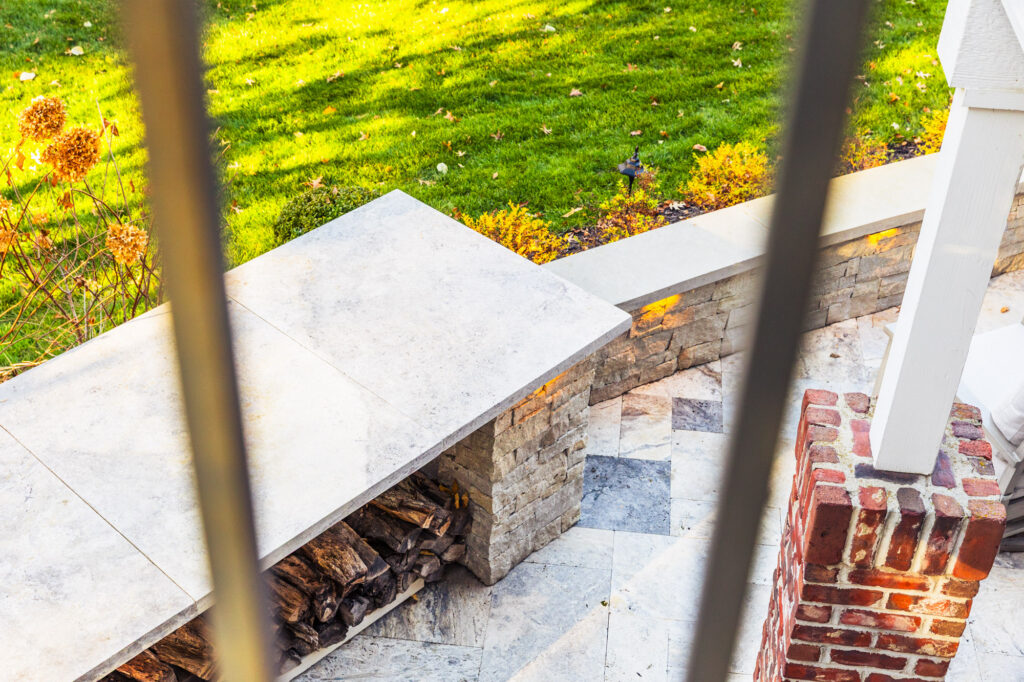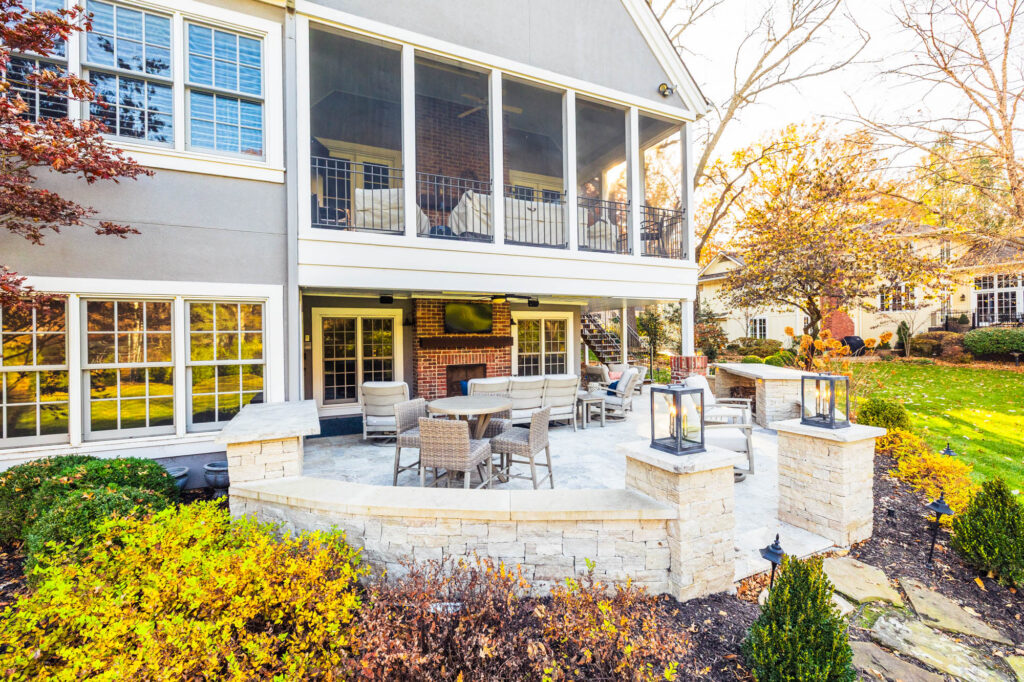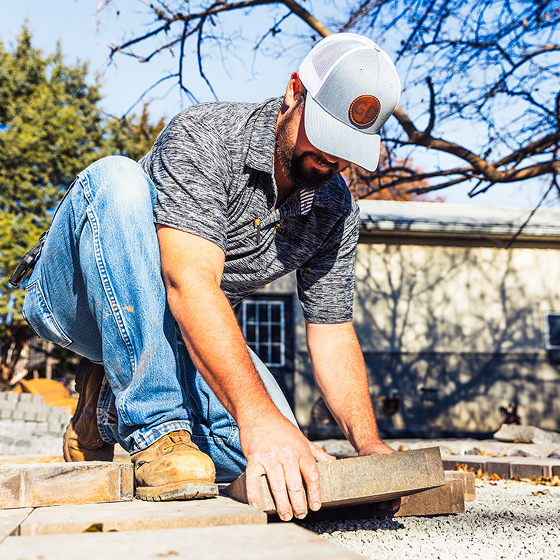
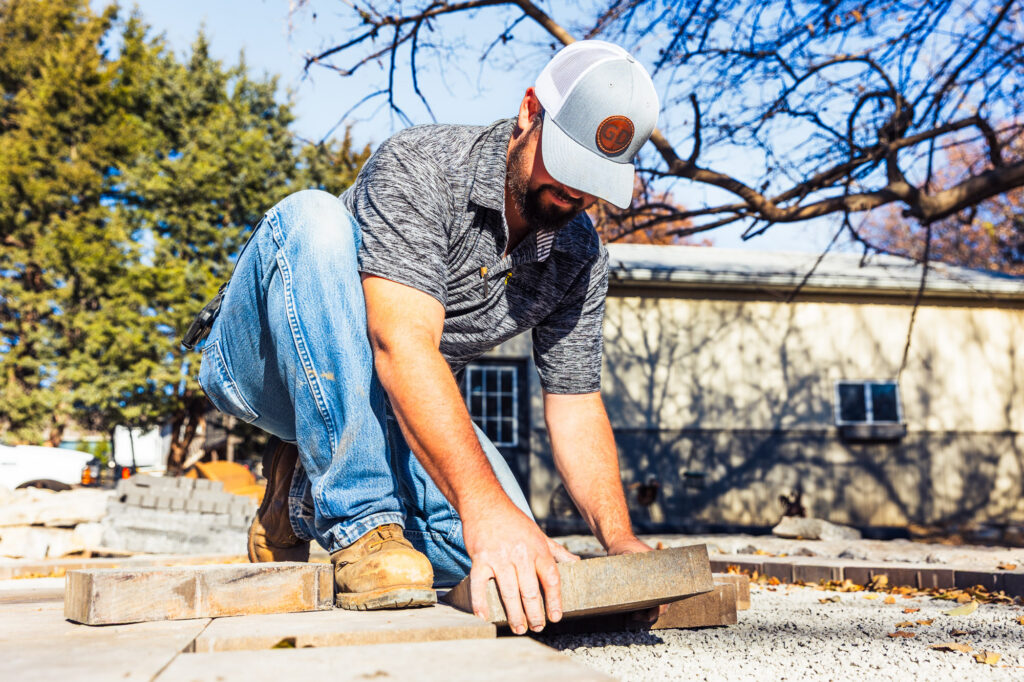
A paver patio can create a durable, welcoming extension of your home, but the finished surface is only as reliable as the system beneath it. Kansas City’s freeze-thaw cycles, summer heat, and heavy rainfall make material selection and installation especially important.
Choose a style that complements the home
Concrete pavers are available in a wide range of colors, sizes, and textures, from clean contemporary slabs to shapes that resemble natural stone. Look for tones that relate to the home’s brick, siding, or trim rather than trying to match one material exactly.
Pay attention to the base
A properly excavated and compacted aggregate base helps prevent settling and uneven edges. The required depth depends on soil conditions and intended use. Edge restraint and carefully graded bedding material keep the pattern stable over time.
Plan where water will go
The patio should pitch away from the house and direct runoff toward an appropriate drainage area. On challenging sites, drains or permeable paver systems may be incorporated into the design. Solving drainage during planning protects both the patio and nearby structures.
Think about long-term care
Routine sweeping, occasional cleaning, and replenishing joint material can keep a paver patio looking sharp. Individual units can also be lifted and reset if underground work or localized settling ever needs attention.