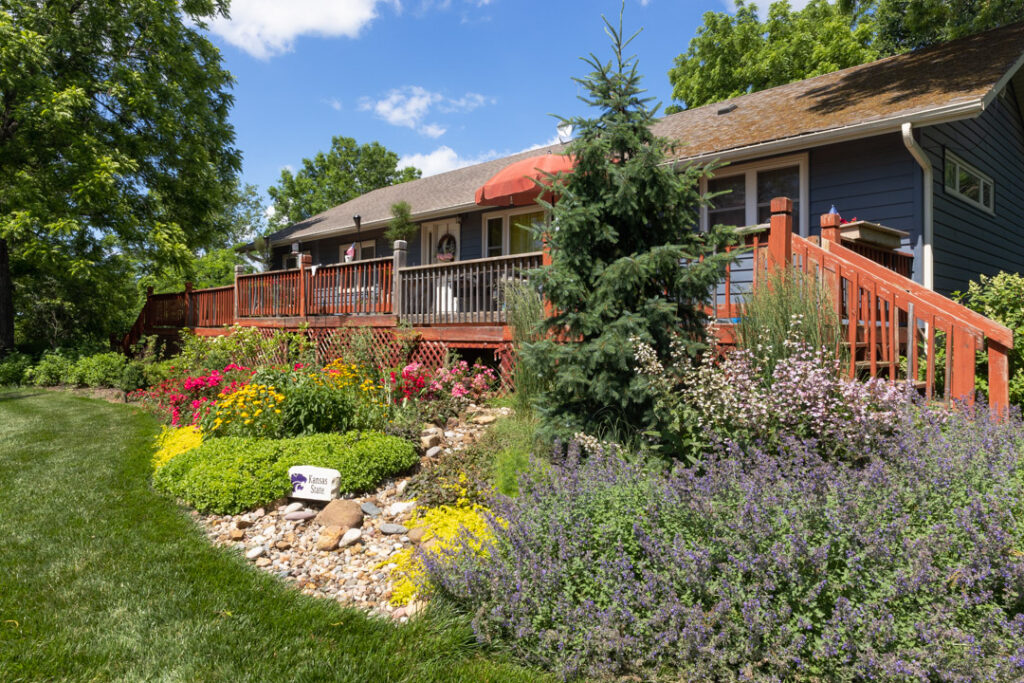
Plants that are well matched to Northeast Kansas can handle seasonal temperature swings while contributing color, texture, habitat, and structure. “Native” and “adapted” do not mean maintenance-free, but the right plants in the right places are easier to establish and care for.
Match plants to site conditions
Sun exposure, drainage, soil type, available space, and wind all matter. A moisture-loving plant placed beside a hot driveway will struggle, just as a drought-tolerant prairie plant may decline in a consistently wet low spot.
Build layers for year-round interest
Trees provide canopy and scale, shrubs create structure, and grasses and perennials fill the lower layers. Combining spring flowers, summer texture, fall color, and winter seed heads keeps beds visually active through more of the year.
Support beneficial wildlife
A diverse planting palette can offer pollen, nectar, seeds, and shelter. Grouping several plants of the same species makes flowers easier for pollinators to find and creates stronger visual impact than scattering single plants throughout a bed.
Plan for establishment
Even resilient plants need consistent watering while roots develop. Proper spacing, mulch depth, and early weed control make a major difference. Once established, a well-designed plant community can become fuller and more balanced with each season.