Retaining walls can define planting beds and add visual structure, but many walls also perform an important engineering job. They hold back soil, manage elevation changes, and help create level, usable areas on sloped properties.
Understand what the wall needs to support
Wall height, slope, soil type, nearby structures, and loads above the wall all influence the design. A small garden wall has different requirements than a taller wall supporting a driveway or patio. Local requirements may also call for permits or engineered plans.
Drainage is part of the wall
Water pressure behind a wall can cause movement, bulging, or failure. Free-draining aggregate, drainage pipe, appropriate backfill, and a reliable outlet help relieve that pressure. Surface grading should also keep unnecessary runoff from flowing toward the wall.
Choose materials for the setting
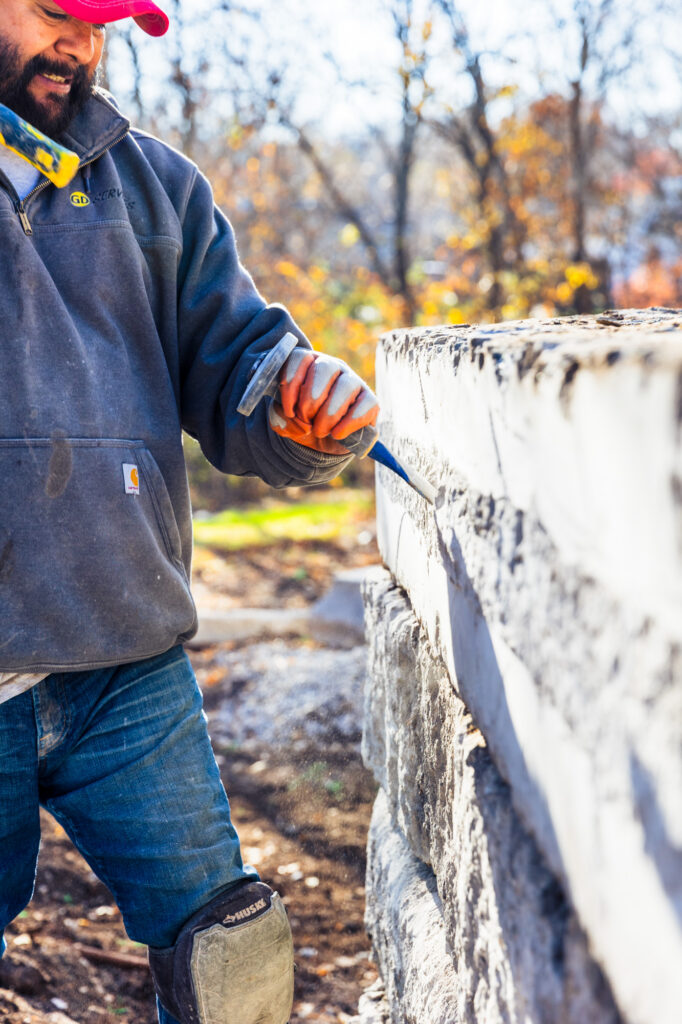
Segmental concrete block offers consistent sizing and a range of finishes. Natural stone creates a more organic appearance but requires careful selection and craftsmanship. Colors and textures should coordinate with nearby paving and the architecture of the home.
Integrate the wall into the landscape
Steps, columns, planting pockets, lighting, and seat-height sections can make a necessary structure feel intentional. Planning those elements together creates a wall that works well and contributes to the overall outdoor experience.